
In the previous post we built a test station for flat surface line scanning. Such a setup is crucial, it's where you prepare the entire system architecture and the algorithms meant to run on it. But it has its limits: a simulation will always differ from production conditions, where far more variables await than we could ever imagine.
Which factors on a production line only surface in the factory?
Some variables only reveal themselves once the installation is up and running in a real paving stone plant. In our case these were:
- diverse products, a manufacturer often has more than 100 different items in their catalog,
- curvature of the production boards,
- imperfections of the belt conveyors,
- "wet" product (uncured concrete) that, combined with a dark color (e.g. anthracite), absorbs the laser far more than other products,
- dirt on the boards left by the production process,
- vibrations,
- high dust levels,
- external light sources of varying intensity, both sunlight and artificial,
- people working on the line.
Without leaving the laboratory we wouldn't even have known these factors existed and posed a real problem. And trying to reproduce them in the lab would take a very long time, and the volume of data collected still wouldn't be as large as on the line.
Why run a pilot deployment of a vision system at a client's site?
That's why piloting the machine at a prospective client's site is a huge advantage. We took this step last year, and it was one of the best decisions for the product's development. There are above all two arguments in its favor:
- Scale of data. On the test station we performed 20–30 scans a day. The machine at the client does 2 to 3 thousand.
- Real conditions. Without the pilot we wouldn't have learned about the external factors affecting the measurement that I described above.
How to choose a spot for a pilot on the production line?
It helps when the pilot client has plenty of room on the line. Then you can install a larger machine, prepared for possible modifications, repositioning components, adding further elements and other experiments. That was also the case for us. The finished installation, integrated with the production line, can be seen in Photo 1.
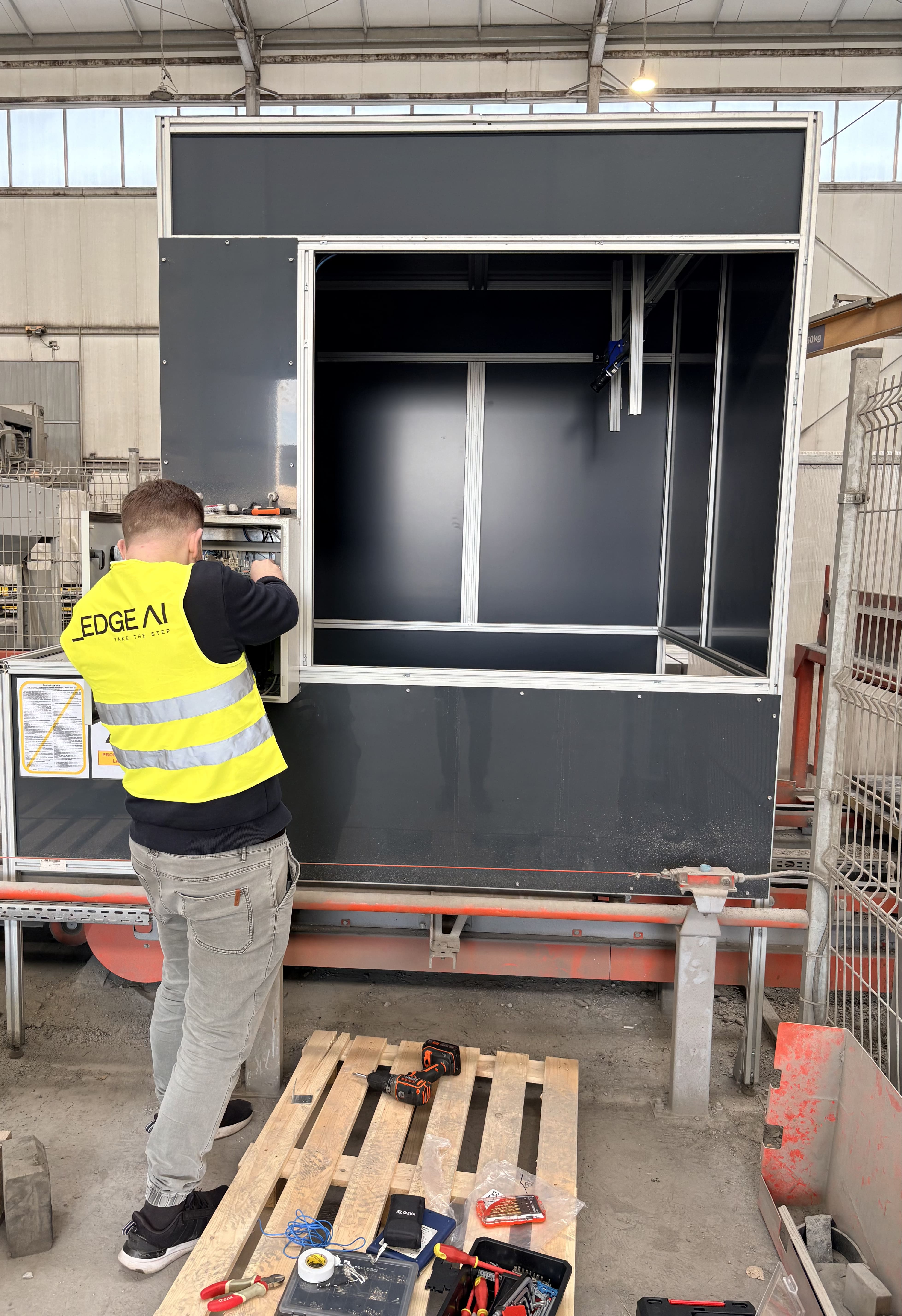
Photo 1: The paving stone line-scanning machine, integrated with the client's production line during the pilot deployment.